

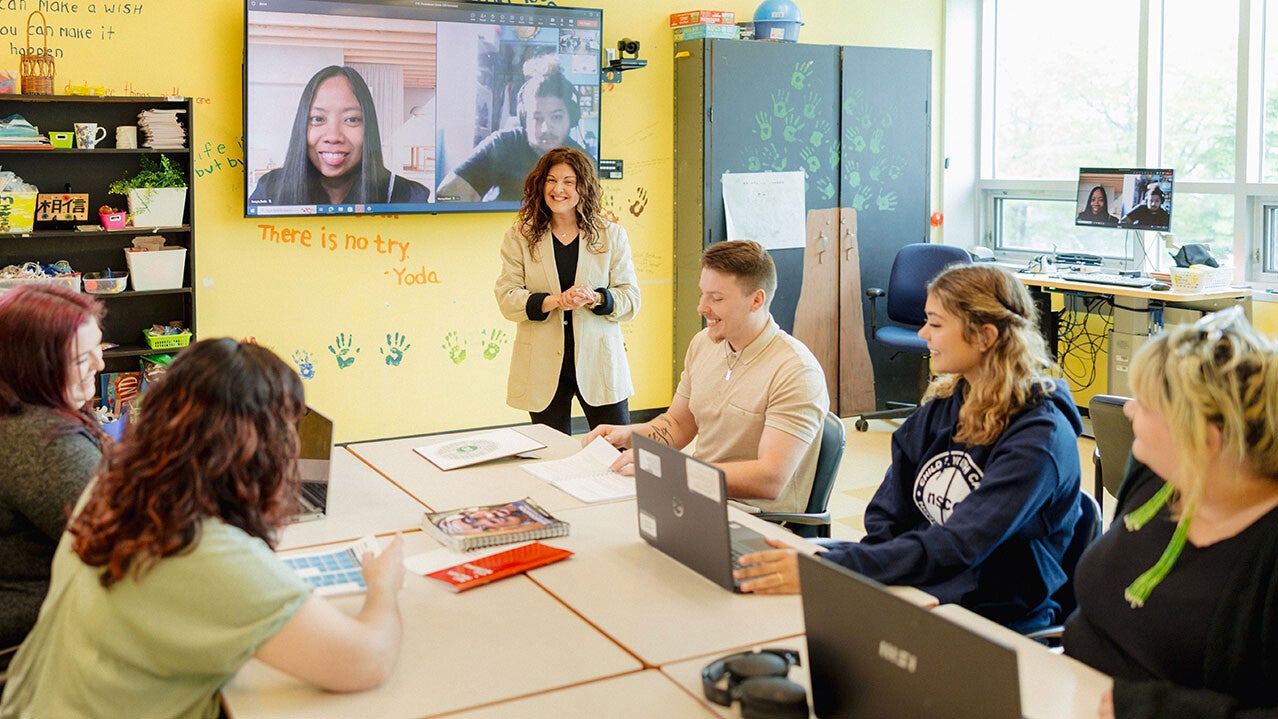
About Me
Hello and welcome to my E-Portfolio!
I am a Child and Youth Care student at Algonquin College. I am passionate about supporting children and youth and helping them feel safe, valued, respected, and understood.
Through my education and practical experiences, I have developed a strong interest in child development, emotional well-being, inclusion, and positive relationships. I believe every child is unique and deserves support that respects their individual strengths, needs, and abilities.
I value empathy, patience, active listening, and continuous learning. My goal is to become a compassionate Child and Youth Care Practitioner who makes a positive difference in the lives of children, youth, and families.
This E-Portfolio represents my learning journey, experiences, professional growth, and development as a future CYC practitioner.
Thank you for visiting my portfolio!
Multimedia Artifact

Listening Is More Than Hearing
George Bernard Shaw’s quote reminds me that communication is not complete just because someone has spoken. Real communication happens when the other person feels heard and understood. I chose an image of a child talking to a caring adult because it represents the importance of active listening in Child and Youth Care. Children may communicate through words, emotions, behaviour, or body language. A Child and Youth Care Practitioner needs to listen carefully, observe non-verbal messages, and avoid making assumptions. Sometimes a child does not need immediate advice; they need a safe person who is willing to listen and understand. This image reminds me that building trust requires patience, attention, empathy, and meaningful communication.
Citation
https://openmindscenter.com/how-to-improve-eye-contact-in-children-with-autism-therapy/

Resources
1. Ontario Association of Child and Youth Care (OACYC)
Ontario Association of Child and Youth Care. (n.d.). Ontario Association of Child and Youth Care.
This organization supports Child and Youth Care professionals through professional development, advocacy, and resources.
2. Children’s Mental Health Ontario
Children’s Mental Health Ontario. (n.d.). Professional resources.
https://cmho.org/professional-resources/
This resource provides information and learning opportunities related to children’s mental health and professional practice.
3. Government of Ontario – Mental Health Services
Government of Ontario. (n.d.). Mental health services for children and youth.
https://www.ontario.ca/page/mental-health-services-children-and-youth
This website helps professionals and families learn about mental health services and available supports for children and youth in Ontario.
4. Knowledge Institute on Child and Youth Mental Health and Addictions
Knowledge Institute on Child and Youth Mental Health and Addictions. (n.d.). Resource hub.
This resource provides information, tools, and learning materials to support evidence-informed practice in child and youth mental health.
5. International Journal of Child, Youth and Family Studies
University of Victoria. (n.d.). International Journal of Child, Youth and Family Studies.
https://journals.uvic.ca/index.php/ijcyfs
This academic journal provides research and articles about children, youth, families, and community practice.
6. CYC Assets
CYC Assets. (n.d.). Resources for the CYC professional.
https://cycassets.ca/resources/
This website offers professional resources, articles, and learning opportunities for Child and Youth Care practitioners.
7. Canadian Child Care Federation – Care for Caregiver
Canadian Child Care Federation. (2024). Care for caregiver [Video].
https://www.youtube.com/watch?v=MnTI4nXy1XY
This video highlights the importance of caregiver well-being and self-care when working with children.
8. CHEO – Mental Health Resources for Youth
Children’s Hospital of Eastern Ontario. (2025). Mental health information for youth.
This resource shares accessible mental health information to help young people understand their emotional well-being.
Why I Selected These Resources
I selected these resources because they support my learning and professional development as a Child and Youth Care student. They provide information about children’s mental health, professional responsibilities, research, community services, and self-care. I believe CYC practitioners need to continue learning, understand the individual needs of children and youth, and work collaboratively with families and other professionals. These resources can help me develop my knowledge, improve my practical skills, and become a reflective and supportive practitioner.
Supporting a Young Person Experiencing Anxiety at School
Presentation Situation / Problem with Client
Maya is a 13-year-old student who has recently started avoiding classroom activities and group discussions. She sometimes becomes quiet, asks to leave the classroom, and worries about making mistakes in front of others. Her teacher has noticed that she has difficulty participating and completing some assignments.
Brief Client Background
Maya lives with her mother and younger brother. Her family has recently moved to a new community. She has not yet developed close friendships at her new school and misses her previous classmates.
Client’s Strengths and Needs
Maya is creative, enjoys drawing, and has a strong interest in animals. She is respectful and communicates well with adults she trusts. She may benefit from emotional support, encouragement, opportunities to build friendships, and strategies to manage anxiety.
Available Resources to Support the Client
- School Child and Youth Care Practitioner for emotional support and relationship building.
- School guidance counsellor for additional support.
- Her mother and trusted family members.
- School clubs and art activities to encourage social connection.
- Community youth programs and mental health services, if needed.
Reflection Questions
- How can a CYC Practitioner build a trusting relationship with Maya?
- What strategies could help Maya feel safe and included in the classroom?
- How can the school and family work together to support her needs?


Learning from a Child and Youth Care Practitioner
Interview Questions
- Do you need to plan activities for children every day?
- Do all children respond to activities in the same way?
- Are there children who need more individual attention and support?
- Do you notice that some children communicate less verbally than others?
- Do all children find it easy to interact and play with other children?
- Are there children who have strong personalities or show challenging behaviors?
- Do children have different interests, such as playing, singing, or listening to stories?
- How do you adapt activities to meet children’s different interests and needs?
Interview with a Daycare Worker
I interviewed a daycare worker to learn about children’s individual needs, interests, and responses to daily activities.
During the interview, I learned that children do not all respond to instructions and activities in the same way. Some children listen carefully and follow instructions, while others are more interested in play. Some children become more engaged through singing, while others enjoy listening to stories.
We also discussed children who may need additional attention, communicate less verbally, or experience difficulties interacting with other children. The worker’s experiences highlighted the importance of recognizing individual differences and adapting activities to children’s interests and abilities.
This interview helped me understand that every child has a unique way of learning and participating. As a future Child and Youth Care Practitioner, I believe it is important to observe children, understand their strengths and needs, and provide inclusive activities that encourage every child to participate and feel valued.
Professional Biography
I am a Child and Youth Care student at Algonquin College with a strong interest in supporting the emotional, social, and developmental well-being of children and youth. Through my learning and practical experiences, I have developed an appreciation for empathy, patience, active listening, and building positive relationships.
My experience working with young children, including children with different developmental needs, has strengthened my understanding of the importance of creating safe, inclusive, and supportive environments. I believe every child deserves to feel respected, valued, and understood.
I am particularly interested in child development, trauma-informed care, emotional regulation, inclusion, and positive behaviour support. I value teamwork, communication, and continuous professional learning.
My goal is to become a compassionate and reflective Child and Youth Care Practitioner who advocates for children and youth, recognizes their strengths, and helps them build confidence and reach their potential.
I believe that small moments of connection can make a meaningful difference in a young person’s life.

Curriculum Vitae
Nemeh Abuobead
Contact Information
- Location: Ottawa, Ontario
- Email: abuo0008@algonquinlive.com
- Phone: 613-501-3434
Professional Profile
Child and Youth Care student at Algonquin College interested in supporting children’s and youths’ emotional, social, and developmental well-being. Caring, patient, and committed to creating safe and inclusive environments.
Education
Algonquin College – Ottawa, Ontario
Child and Youth Care Program
2026 – Present
Relevant Experience
Childcare / Daycare Experience
- Supported young children in daily activities and routines.
- Encouraged positive interactions and participation.
- Helped maintain a safe and supportive environment.
- Practiced patience, communication, and positive guidance.
Summer Camp Experience
- Supported children during camp activities.
- Helped create an inclusive and welcoming environment.
- Encouraged participation and positive social interactions.
- Developed practical skills in observation, patience, and relationship building.
Relevant Skills
- Active listening and communication
- Empathy and patience
- Relationship building
- Teamwork and collaboration
- Child development awareness
- Inclusion and positive guidance
- Reflective practice
- Interest in trauma-informed care
Professional Interests
- Child and youth mental health
- Emotional regulation
- Trauma-informed practice
- Advocacy and inclusion
- School-based Child and Youth Care
References
Available upon request.
Create Your Own Website With Webador